
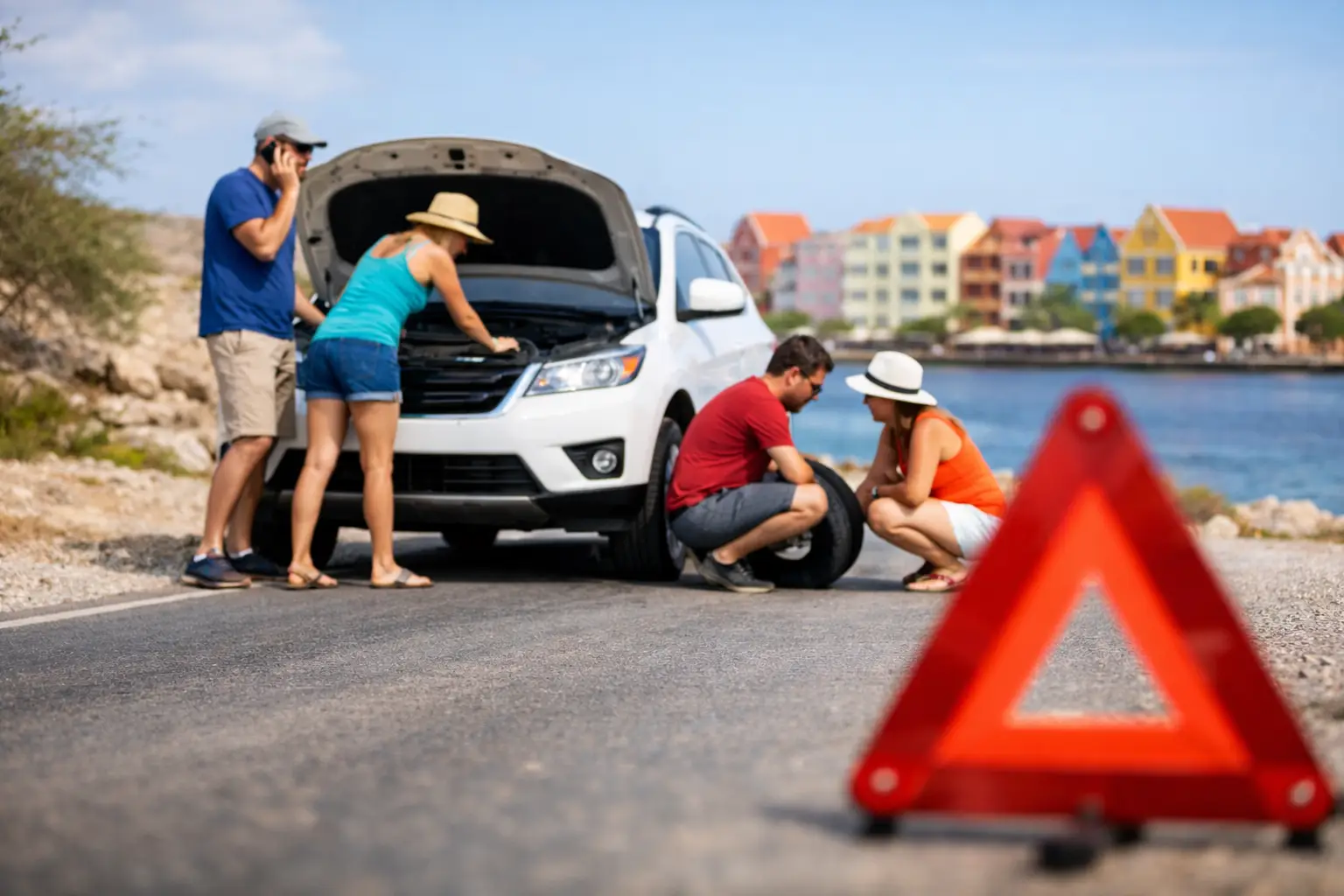
A flat tire on the way to Westpunt, a warning light outside Willemstad, or a small parking-lot scrape can feel much bigger when you are on vacation. The good news is that how tourists handle roadside emergencies in Curaçao usually comes down to a few calm decisions: get to a safe place, contact the right people, and avoid trying to solve a problem you are not equipped to handle.
Curaçao is made for exploring by car. You can leave the busy streets around Punda and be headed toward quiet beaches, coastal viewpoints, or a local lunch spot in a short time. That freedom is exactly why it helps to know what to do before something unexpected happens. A little preparation protects your day, your travel companions, and your rental agreement.
First, Get Yourself Out of Harm’s Way
Your first priority is never the vehicle. If the car is still moving, slow down gently, turn on the hazard lights, and pull as far off the road as safely possible. Avoid stopping just after a blind curve, on a narrow shoulder, or where other drivers may not see you easily.
On island roads, conditions can change quickly. Some routes are well paved and busy, while others are quieter, narrower, and less brightly lit after dark. If you have a flat tire or mechanical issue, stay aware of passing traffic and keep children close to the vehicle. If the car cannot be moved safely, remain in a protected location nearby rather than standing in the road.
Take a moment to look around before making calls. Note a recognizable landmark, road name, beach entrance, restaurant, gas station, or neighborhood. A dropped map pin can also make it much easier for roadside support to find you, especially outside central Willemstad.
How Tourists Handle Roadside Emergencies Without Panic
Once everyone is safe, contact your rental company using the emergency or support number provided at pickup. A good local rental company should be able to tell you what to do next, whether that means sending assistance, arranging a replacement vehicle, or directing you to a nearby service point.
Share the basics clearly: your location, the vehicle type or license plate, what happened, whether the car is drivable, and whether anyone is injured. Photos can be useful, particularly if you see tire damage, a dashboard warning light, or any visible damage after an incident.
This is where renting from a company with direct, responsive support makes a real difference. At XS Car Rental, travelers can reach local support 24/7, so they are not left guessing what a warning light means or searching for help on an unfamiliar road.
Do not assume every issue requires the same response. A low tire-pressure warning may be manageable with guidance, while smoke from the engine, leaking fluid, a strong burning smell, or a serious warning light means you should stop driving and wait for instructions. Pushing on to reach your hotel can turn a minor repair into a larger problem.
If You Have a Flat Tire
A flat tire is frustrating, but it does not have to end the day. Do not drive on a visibly flat tire unless you must move a few feet to reach a safer spot. Continuing to drive can damage the wheel and make the situation more complicated.
Many travelers are comfortable changing a tire at home but should think twice on an unfamiliar roadside, in heat, or near traffic. It may be safer to wait for assistance, especially if you are traveling with children, parked on uneven ground, or unsure whether the rental vehicle has a spare tire and the proper tools.
Take a photo of the tire and contact your rental provider. They can advise whether roadside assistance, a tire change, or a vehicle swap is the best option. This approach also keeps the rental company informed before any work is done.
If the Vehicle Will Not Start or Breaks Down
If the car will not start, check the simple things without forcing anything: confirm it is in park, make sure the key or start button is being used correctly, and look for any obvious dashboard message. Avoid repeated attempts if you smell fuel, notice smoke, or hear unusual grinding.
For a breakdown while driving, pull over safely and turn on the hazard lights. Then call your rental company rather than accepting help from an unknown repair shop right away. Local assistance is valuable, but your rental provider needs to approve repairs or towing so that insurance and vehicle care are handled correctly.
Keep your phone charged when taking longer drives around the island. If your battery is low, switch off unnecessary apps, use low-power mode, and send your exact location early. A portable charger is one of the smallest items that can make a roadside delay far less stressful.
If There Is an Accident
Even a minor accident deserves a careful response. Check whether anyone is hurt first. If there are injuries, serious damage, a blocked road, or an unsafe situation, contact local emergency services immediately and follow their instructions.
For a minor collision, stay calm and do not argue about fault at the roadside. Exchange the necessary information, take clear photos of the vehicles, damage, license plates, and surrounding area, then call your rental company as soon as possible. They can explain the next required steps under the rental and insurance terms.
Do not leave the scene of an accident without guidance. Also, do not agree to private cash arrangements simply because a situation appears small. What looks like a light bumper scratch may involve damage that is not visible, and proper reporting protects everyone involved.
Avoid Making a Small Problem More Expensive
Roadside emergencies often become costly when visitors act quickly without checking their rental agreement. The temptation is understandable: you want to get back to the beach, dinner reservation, or airport. But unauthorized repairs, towing a vehicle without approval, or continuing to drive with a warning light can create avoidable complications.
Before your trip, ask what roadside assistance includes, how to report damage, and what insurance coverage applies. Transparent answers are more useful than a low daily rate that leaves important details unclear. Keep the rental agreement, support contact information, and vehicle documents somewhere easy to reach, not buried in a suitcase at your accommodation.
It also helps to take a quick walk-around video when you receive the vehicle. Capture the exterior, wheels, windshield, and fuel level. This takes less than a minute and gives both you and the rental company a clear starting record.
Prepare Before You Leave for the Day
You do not need to turn a vacation drive into a checklist exercise. A few sensible habits are enough. Bring water, especially on longer beach days; carry a charged phone and a charging cable; save your rental company’s support contact; and use navigation before you leave areas with dependable Wi-Fi.
Pay attention to where you park. Avoid poorly lit or isolated spots at night, keep valuables out of sight, and do not leave bags or electronics visible in the car. On hot days, never leave children or pets in a parked vehicle, even for a short stop.
Finally, give yourself extra time. Many roadside mistakes happen when travelers are rushing to return a car, catch a tour, or reach the airport. A relaxed schedule gives you room to pull over safely, make the right call, and let local support handle the practical details.
A roadside issue does not have to take over your Curaçao trip. Keep your location clear, your phone charged, and your rental company’s number close by. Then you can spend less time worrying about the unexpected and more time enjoying where the road takes you.